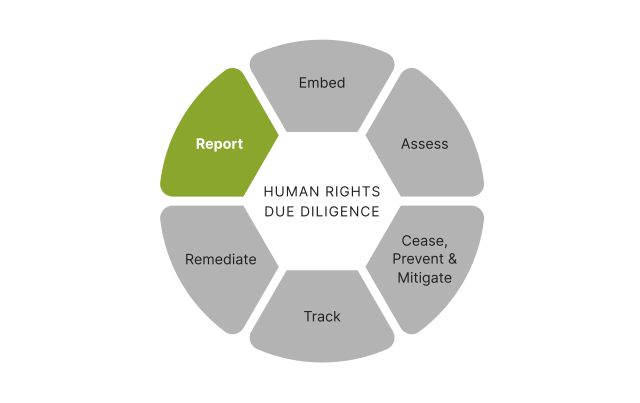
Components:
Reporting on progress is the ongoing practice of publicly sharing relevant information on due diligence processes, activities, and impacts.
Good reporting practice requires comprehensive and regular reporting on the full range of a company’s due diligence activities.
Further reading
Comply Chain – Step 8: Report Performance and Engagement.
Database of Company Reporting
Guide on Public Reporting for Private Sector Stakeholders.
Reporting Matters
UN Guiding Principles Reporting Framework


Overview
Supply chain transparency refers to a company’s public openness about its supply chain map, including disclosure of its sourcing origins to country or sub-country level, and the names and locations of suppliers at Tier 1 and beyond.
How much supply chain transparency is “enough”? Stakeholders have different views on this. Know the Chain (a nonprofit partnership between Humanity United, the Business & Human Rights Resource Centre, Sustainalytics, and Verité) includes transparency measures in its methodology for evaluating food and beverage companies’ efforts to combat forced labor, and may serve as a useful benchmarking framework.
Maturity benchmarking
Basic

The company is working internally to build buy-in and plan for public disclosure of supply chain mapping information.
How to get there:
- Benchmark peer companies’ levels of supply chain disclosure, gauge the company’s level of risk tolerance on transparency
- Build a plan for publishing supply chain mapping information, including timeframe and format (e.g., sustainability report, traceability platform website)
- Advocate with internal decisionmakers on proposed transparency plan; obtain approvals as needed
- Ensure supply chain information management system is set up to capture information needed for disclosure
Established

In addition to “Basic,” the company is disclosing some supply chain mapping information.
How to get there:
- Disclose names and locations of first-tier suppliers in at-risk commodity-geography combinations
- Begin disclosing second-tier suppliers in at-risk commodity-geography combinations
- Engage with key stakeholders on the disclosures to seek feedback for continual improvement
- Review progress against the transparency plan and adjust as necessary to stay on track
Leadership

In addition to “Established,” the company takes further steps toward best-practice transparency of its mapping data, including at the first mile level.
How to get there:
- Disclose supply chain mapping data in accordance with, or beyond, best practice benchmarks
- Align disclosure of supply chain mapping information with reporting on implementation of HRDD and impact on salient issues (see 6.2 Public Reporting on Implementation and 6.3 Public Reporting on Impact)
- Refresh and repeat disclosures at a publicly committed, regular intervals
- Expand the percentage of at-risk supply chains disclosed to first mile level over time
Further reading
Uncommon Cacao’s 2022 Transparency Report
Forest Positive Coalition: KPI Reporting Commitment
Unilever: Our Material Sustainability Issues
Pepsico: Palm Oil
Palm Oil Mill Lists


Overview
Companies reporting on their human rights due diligence actions often choose to showcase concrete activities such as awareness-raising or provision of support to farmers in their supply chains.
All elements of due diligence should be in scope for reporting on implementation. Examples include progress on embedding human rights in its business management systems, the status of efforts to assess and prioritize salient issues in own operations and supply chains, actions it is taking to cease, prevent, and mitigate human rights risks, and actions taken to remediate any human rights harms identified.
Data points should always be contextualized in reporting with relevant information such as percent of farms or volumes covered, so that readers are able to evaluate the meaningfulness of the company’s efforts. Reporting against maturity benchmarks such as those in this toolkit can provide discipline, guide development of implementation pathways/plans, and allow external observers to understand company efforts accurately.
Maturity benchmarking
Basic
The company publishes a report that meets regulatory HRDD requirements, discusses the company’s HRDD system, and describes how it will measure progress toward full implementation of HRDD.
How to get there:
- Determine which implementation-related high-level KPIs the company will report on publicly (3.2 Indicators and Targets)
- Establish internal lines of communication and management to ensure coordination on data points to be tracked and reported
- Publish an annual, public report that conforms to HRDD laws and includes the selected objectives and KPIs
Established
In addition to “Basic,” the company publicly reports on progress toward its high-level HRDD implementation targets and begins to report publicly on some supporting indicators for its higher-risk commodities and geographies.
How to get there:
- Report progress toward the selected high-level KPIs and targets
- Begin reporting progress toward some supporting indicator targets related to implementation of HRDD systems and processes in prioritized supply chains (3.2 Indicators and Targets)
- Engage with stakeholders to receive feedback on reporting and further improve it 4. Identify appropriate ways to report progress to affected stakeholders
Leadership
In addition to “Established,” the company regularly and transparently reports on progress against targets for implementation of HRDD, covering all salient issues and at-risk supply chains. It participates in and aligns reporting practices with best-practice initiatives and frameworks.
How to get there:
- Expand reporting on implementation of HRDD systems and processes to cover all at-risk supply chains
- Develop case studies or other communications to capture challenges and lessons learned related to tracking and reporting on implementation of HRDD systems
- Participate in best-practice reporting initiatives and frameworks to improve reporting, learn from peers, and share insights on reporting
Further reading
Taking Action to Eliminate Child Labor from our Leaf Supply Chain, Ensuring Safe Working Conditions on Contracted Farms
OFI Modern Slavery and Human Trafficking Statement 2024
Food & Beverage Findings Report
Benchmark Methodology Food & Beverage
Reporting Trends and Insights: Who’s Responsible and Accountable for Addressing Human Rights Risks Within the Company?
Tools to Communicate

Overview
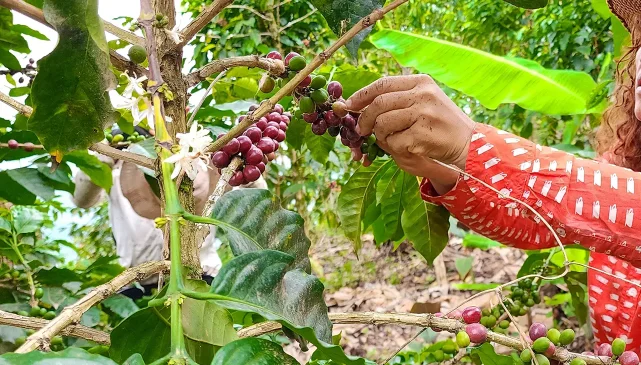
Impact indicator reporting demonstrates to stakeholders whether company activities and systems achieve desired outcomes and confirms sustainability resources are being deployed effectively.
In the early stages of maturity, a company will likely focus more on implementation-related indicators; as the company matures in its HRDD, it will shift toward impact indicators.
Public reporting on impact often begins simply with disclosure of the salient issues identified and the key commodities and geographies the company has prioritized for addressing them. Basic data on numbers of incidents may be communicated to establish a baseline for future progress tracking. As the company’s HRDD system matures, reporting on impact should become more comprehensive and ambitious, including the impact of company efforts to address underlying root causes of salient issues. Companies should engage with affected stakeholders to verify impacts, identify unintended consequences, and continually improve program design.
Maturity benchmarking
Basic
The company publicly reports the salient human rights risks in its operations and supply chains and the at-risk commodities and geographies where it is focusing its efforts to drive impact.
How to get there:
- Gain internal buy-in to publicly disclose the company’s most salient human rights risk issues and most at-risk commodities and geographies of sourcing
- Report the information publicly
- Work to increase internal buy-in for public reporting on high-level impact-focused KPIs and targets (3.2 Indicators and Targets)
Established
In addition to “Basic,” the company regularly reports on its impact on salient issues in its operations and prioritized at-risk commodities and geographies.
How to get there:
- Determine which high-level, impact-related KPIs and targets the company will report on publicly (see 3.2 Indicators and Targets)
- Establish internal lines of communication and management to ensure coordination on data points to be tracked and reported
- Include progress toward high-level impact-related targets in annual, public reports, being sure to contextualize impact data to avoid cherry-picking and accurately communicate performance
- Explore additional options to achieve transparency, for example through collective reporting in collaboration with peer companies
Leadership
In addition to “Established,” the company also reports on some of its supporting impact indicators related to prioritized at-risk commodities and geographies. It participates in initiatives to drive transparent reporting on human rights impact across companies and sectors.
How to get there:
- Going beyond reporting on high-level impact KPIs, publicly report on selected impact-related supporting indicators and targets
- Include qualitative information about root causes identified and systemic solutions implemented
- Include information about engagement with and verification of impact by affected stakeholders
- Ensure company executives communicate both internally and externally about HRDD efforts and their impact on human rights risks and harms
- Engage in industry or multi-stakeholder initiatives to push for adoption of specific, measurable impact indicators and targets which all members report publicly
Further reading
Hershey’s 2021 ESG Report
Cocoa Compass Impact Report 2022.
Focusing on Mexico: Improving Human Rights and Labor Practices and Taking Action to Eliminate Child Labor from our Leaf Supply Chain, Ensuring Safe Working Conditions on Contracted Farms
Unilever’s 2021 Human Rights Progress Report
Integrating SDGs into Sustainability Reporting
Cargill Palm Sustainability Dashboard: Managing Grievances
Unilever’s Palm Oil Grievance Tracker
Benchmark your company’s HRDD system
Our Maturity Benchmarking Tool is a simple way to identify where you stand and what to tackle first.
Start the benchmarking assessment