By Antônio Carlos de Mello Rosa
Program Director, Brazil
Many of the world’s largest industries—cosmetics, pharmaceuticals, and automotives, amongst others—rely on a little-known ingredient harvested in northeastern Brazil: Carnauba wax. Extracted from the leaves of a palm, this versatile product is something that most people have never heard of yet encounter on a daily basis.
The carnauba wax sector is recognized for its strong environmental sustainability. The palm, from which the powder used to make Carnauba wax is harvested, grows either “wild” or “semi-wild”, not requiring the clearing of land planting, and the harvesting process does minimal damage to the leaves, allowing the same trees to be harvested year after year.
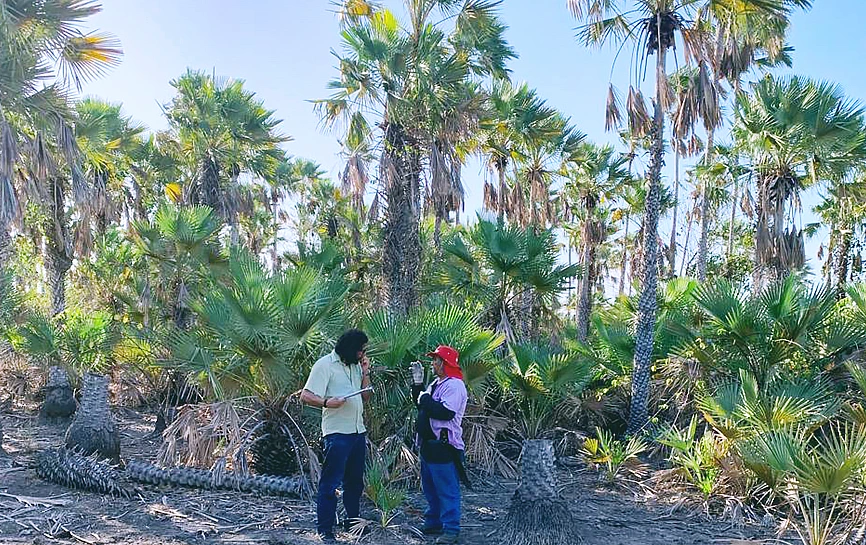
A Verité team member interviews a carnauba worker in Brazil
The Structural Challenge of Informality in Carnauba
However, alongside the environmental strengths, the carnauba sector has long grappled with a well-documented social challenge: informality. In the sector, workers have historically worked informally without contracts or registration, elevating the risk for potential exposure to unsafe working conditions and a lack of basic labor protections. This risk is compounded by an absence of knowledge on key topics—including labor rights, human rights, and workplace risk prevention—amongst producers who are responsible for hiring workers and organizing the harvest. These knowledge gaps both make risks for workers even higher and create legal and reputational risks for private sector actors along the supply chain.
These are not issues that can be solved by any single actor. Addressing systemic labor risks requires collective pre-competitive spaces where stakeholders from across the sector, alongside government representatives, public policymakers, civil society, and unions, can come together to build collaborative solutions.
Collective Action in Practice: The Pro-Carnauba Dialogues
One example of this collective approach is the Diálogos Pró‑Carnaúba (Pro‑Carnauba Dialogues). This multi‑stakeholder initiative was established in 2023 to promote dialogue, cooperation, and joint problem‑solving on sustainability and decent work in the carnauba sector.
Based on its long‑term experience working on human rights due diligence (HRDD) and labor issues in carnauba, Verité was selected to coordinate the initiative’s working group on Income Generation and Decent Work. In this role, Verité helps to create a space where different stakeholders can share information and work together on practical solutions that respond to on‑the‑ground realities and advance responsible business practices.
Key Takeaways from Verité’s Ongoing Work in Carnauba
Alongside these sector—level efforts, Verité’s work in carnauba has focused on practical HRDD interventions to address labor risks on the ground. This work complements existing social sustainability efforts by a range of stakeholders across the sector. When an informal sector intersects with the international market, on-the-ground realities often clash with the HRDD standards and expectations of global buyers. To help close these gaps, Verité has implemented a series of interventions focused on both systems and on‑the‑ground practices.
As a core part of its HRDD approach, Verité began its work in carnauba in Brazil with an in‑depth root cause analysis, drawing on desk research, field visits, and interviews across the supply chain. This analysis helped identify risks, priority areas for interventions.
The key takeaways below reflect how HRDD interventions identified during this process have been applied in practice and what this work has reaffirmed about strengthening labor practices on the ground.
Awareness-raising and capacity building for key stakeholders is an important step for promoting actionable change.
Capacity building is extremely valuable, particularly for producers responsible for hiring workers and organizing the harvest.
Training and awareness‑raising activities strengthened producers’ understanding of labor rights, human rights, and workplace risk prevention.

Practical tools—such as a free mobile application that supports self‑assessments and generates clear improvement plans—also helped reduce barriers to action.
By using the app, I was able to understand that I need to ask all my workers to undergo medical exams before and after they start working for me.
Carnauba producer
Grievance mechanisms need to meet workers where they are at.
Verité’s work emphasized the importance of grievance mechanisms that are accessible and adapted to workers’ daily lives. In the carnauba sector, traditional tools such as suggestion boxes often fall short due to low literacy levels and workers’ indirect or inconsistent access to these channels. To address this, Verité supported the development and adaptation of a grievance mechanism that worker could access directly using QR codes that was designed for low-literacy stakeholders, including the option to submit complaints through voice notes.
Only truly knowing the gaps in your HRDD plan makes it possible to work towards closing them.
Verité conducted assessments of company HRDD systems using the OECD Due Diligence Guidance for Responsible Business Conduct as a reference. The assessments provided a comprehensive overview of existing gaps and identified priorities to strengthen socially responsible supply chain management.
Meaningful stakeholder engagement depends on informed worker representatives.
Meaningful stakeholder engagement depends on the effective inclusion of workers and their representatives. In collaboration with industry partners, Verité facilitated training sessions for worker representatives, focusing on the sector’s main labor challenges. These sessions strengthened representatives’ understanding of key issues, preparing them to engage more effectively in constructive dialogue with other stakeholders.
“We have been closely collaborating with the carnauba sector for years, but this is the first time we were truly capable of understanding the entire structure of the chain of production, its links, and who is who.”
Union Representative
These interventions highlight learnings around practical application of HRDD at the operational level, but sustaining progress in the carnauba sector will require continued multi-stakeholder dialogue and prevention‑focused approaches.
What Must Continue: Shared Responsibility, Dialogue, and Prevention
Verité believes that creating and sustaining spaces for open, horizontal dialogue—and for preventive, pre-competitive collaboration—must remain a priority. These spaces help generate evidence-based knowledge and foster solutions built through cooperation among stakeholders across a sector. In turn, this collaborative approach increases the likelihood of meaningful impact while helping ensure fairer competition and more sustainable supply chains.
Verité’s experience in the carnauba sector makes clear that advancing social sustainability ultimately depends on whether actors are willing to collectively tackle systemic labor challenges, rather than work around them.
About the author
 As Brazil’s Country Lead and Co-leader of the Technical Assistance to Governments Practice Group, Antônio Rosa has led Verité’s initiatives in Brazil since 2022. During this time, he directed the Cooperation on Fair, Free, Equitable Employment (COFFEE) Project, developing and implementing the COFFEE Toolkit, and piloting projects in Brazil, Colombia, and Mexico.
Antônio leads HRDD system implementation in the Carnauba wax sector, developing compliance tools and training materials for producers and workers. His research spans multiple Latin American production chains, including cocoa, coffee, palm oil, and sugarcane.
Brazil, Carnauba