Initiative

STREAMS: Supply Chain Tracing and Engagement Methodologies

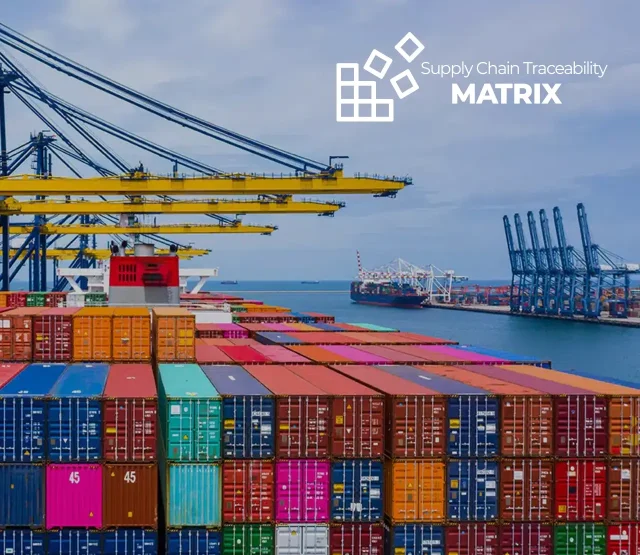
Overhead shot of a cargo ship with colourful containers Overhead shot of a cargo ship with colourful containers

Supply chain traceability can deliver big results for companies – we think it should work for workers, too.

Through rigorous research, we develop innovative resources and approaches for supply chain traceability and labor rights due diligence to help detect and prevent forced labor and child labor across global supply chains.

About the project

Working at the nexus of traceability and due diligence, the Supply Chain Tracing and Engagement Methodologies (STREAMS) project helped companies, advocates, and government officials leverage innovative approaches to increase downstream and upstream tracing of goods made with child labor and forced labor in order to combat labor abuses throughout global supply chains.

The STREAMS project was implemented from 2021 to 2025.

Resources for traceability and labor rights due diligence

STREAMS resources provide practical guidance on using traceability to support labor due diligence. By showing how traceability systems can identify risks, mitigate harm, and improve transparency, these resources help stakeholders integrate traceability into their due diligence efforts.

Explore the resources

Supply chain traceability matrix

The Traceability Matrix is a framework that helps companies use supply chain traceability to address forced and child labor risks. It guides users in defining due diligence goals, identifying needed insights, choosing methods, and assessing feasibility.

Explore the Matrix

Traceability in Indian cotton supply chains

STREAMS partnered on two pilots in India’s cotton supply chains to test new approaches to due diligence and sustainability. These pilots explored novel traceability methods in the base and middle tiers of production.

Cotton chain of custody pilot

A long row of cotton spools in a factory

Through cooperation with Better Cotton, the STREAMS Cotton Chain of Custody Pilot focused on exploring how traceability technologies could best support sustainability initiatives toward the goals of improving worker and producer well-being at the base of supply chains. The pilot tested several physical chain of custody models in cotton supply chains in India as well as the use of digital platforms and additive tracers to support product tracking and origin validation at downstream tiers, including spinning and textile mills, to brands and retailers.

Technology for these pilots was supported by the following partners: Tailorlux, Haelixa, and Retraced.

For insights generated from these pilots, have a look at our issue briefs on Additive Tracers and Digital Chain of Custody Platforms.

Mid-tier gatekeeper pilot

Shipping containers in a dock yard

Assessing the use of due-diligence standards to exclude higher-risk goods at key supply chain nodes
Through a collaboration with the Responsible Sourcing Network, the STREAMS Mid-Tier Gatekeeper Pilot focused on enabling actors in the mid-tiers of supply chains to leverage due diligence and traceability to achieve positive impact on labor rights. The pilot contributed to the development and implementation of RSN’s YESS Standard, which provided a foundation for the YESS due diligence sourcing initiative for spinners and textile mills. The pilot also demonstrated how supply chain mapping and risk screening platforms and forensic tracing technology could support and validate due diligence initiatives to achieve positive labor impact in cotton supply chains in India.

Technology for these pilots was supported by the following partners: Oritain, Responsible Sourcing Network and Sourcemap.

For insights generated from these pilots, have a look at our issue briefs on Forensic Isotopic Testing and Supply Chain Mapping & Transparency Platforms.

Project partners

Better Cotton

Better Cotton is a multi-stakeholder cotton sustainability initiative that aims to promote measurable improvements in the environmental and social impacts of cotton cultivation worldwide to make it more economically, environmentally, and socially sustainable. Better Cotton’s mission is to help communities (including smallholders and farm workers) survive and thrive, while protecting and restoring the environment.

Responsible Sourcing Network (RSN)

Responsible Sourcing Network (RSN) is a non-profit for-benefit corporation dedicated to ending human rights abuses associated with the raw materials found in everyday products. RSN’s Yarn Ethically & Sustainably Sourced (YESS) initiative trains and assesses yarn and fabric manufacturers on the implementation of a due diligence approach to identify, prevent, and mitigate forced labor involved in cotton production.

Sourcemap

Sourcemap, with expertise in supply chain mapping and visualization, is a pioneer in supply chain transparency, providing a suite of software, advanced analytics, and services to assist supply chain stakeholders on the road to transparency. Their software gives procurement teams insights into the end-to-end supply chain to ensure that best practices are implemented every step of the way.

Project funding

U.S. Department of Labor

Funding for this project was provided by the U.S. Department of Labor under cooperative agreement number IL‐35805.

100% of the total costs of the project or program was financed with USG federal funds, with an original amount of 4,500,000 dollars. This material does not necessarily reflect the views or policies of the United States Department of Labor, nor does mention of trade names, commercial products, or organizations imply endorsement by the United States Government.

For more information on traceability and labor due diligence, get in touch.

Erin Klett

Lead, Research and Innovation

Contact Erin