As seen in the May 2026 issue of Tea & Coffee Trade Journal
By Rachel Rigby
Senior Director, Extended Supply Chains and Responsible Sourcing
Women farmworkers are essential yet highly vulnerable participants in coffee and tea supply chains, whose contributions are frequently overlooked, especially by companies’ human rights due diligence efforts. Bringing greater visibility to their work and identifying risks that women workers face is vital to creating more ethical and sustainable industries.
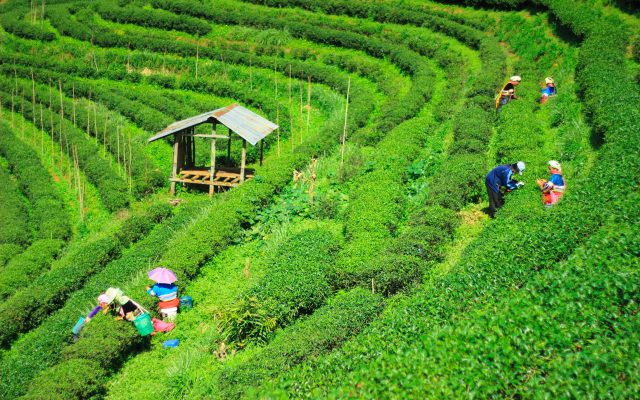
If you work in the coffee or tea business, you likely have images in your mind of the places where these crops are grown. Humble family dwellings surrounded by coffee trees; misty mountainsides and tea plantations with orderly rows of lush leafy plants. Thanks to discerning consumers and sustainability-minded companies, there is growing awareness about coffee and tea origins, and more attention paid to the farmers who cultivate these crops we depend on. But beyond the farmers is another, less visible workforce: hired workers who plant, cultivate, and pick coffee and tea — a sizable proportion of whom are women.
These women are often overlooked by coffee and tea companies’ human rights due diligence efforts. Women are likely to be in informal, lower-paid roles and face risks that differ from men — from unequal pay to increased vulnerability to sexual harassment or abuse, as well as limited support and access to channels for raising concerns or reporting abuses.
Women Workers are Vital to Coffee and Tea Production
Women play a central role in the production of both coffee and tea, yet their contribution, along with the distinct labour risks they face, often remain invisible. An estimated 60 percent of the world’s tea comes from smallholder farms, and 70 percent of the world’s coffee. On these farms, women workers are usually part of the farming family unit, working unremunerated to contribute to the family income. Tea production relies heavily on larger farms and estates.
In India and Sri Lanka – where roughly 25 percent of the world’s tea is grown – more than half of tea pickers are women. In coffee, women similarly represent an important share of workers, accounting for 30 to 60 percent of workers in Asia, 50 to 75 percent in Sub-Saharan Africa, and approximately 20 percent in Latin America. Regardless of the region, women typically perform work that is manual and labour-intensive, such as harvesting and processing.

Women in producing origins have more limited access to education than men, thus lower literacy rates.
The Conditions that Increase Risk for Women Workers
To understand why women are disproportionately at risk of facing labour and human rights abuses in coffee and tea origins, it is critical to first understand the social and cultural context in which they live and work. Poverty is a reality in many coffee and tea-growing communities. Workers who are in precarious financial situations are generally more vulnerable to labour abuses, as they may be desperate for income and be less willing or able to speak out against violations. This vulnerability is exacerbated for women who must work to fill a household income gap, or in cultures where women are discouraged from speaking up.
In many tea- and coffee-producing origins, women also have more limited access to education and, therefore, lower literacy and numeracy rates than men. Access to health care facilities and support is also inadequate, particularly regarding reproductive health and other medical issues specific to women. Although these issues are societal and structural – and are far beyond the ability of coffee or tea companies to solve alone – they are common root causes that drive labour rights abuses on farms.
Salient Labour and Human Rights Risks for Women
Low and unequal pay
Certain kinds of labour rights violations are common across both the coffee and tea sectors, and some of the most widespread violations relate to compensation. Because work is often compensated on a piece-rate basis (ie, payment for number of seedlings planted, weight of coffee cherries picked or baskets of tea leaves), actual wages paid may not amount to even the legal minimum per hour or day. Women sometimes receive no remuneration at all, coffee farms often employ male heads of household who are paid for the production of the whole family unit, while women and girls are treated as unpaid “helpers.” This makes women and girls an invisible but essential and highly vulnerable participants in coffee supply chains.
Health and Safety and Threats to Privacy and Dignity
Safety and health issues also affect women workers across both sectors. Harvesting is the most common job role for women on farms, and many touch the coffee cherries and tea leaves with their bare hands, exposing them to chemical fertilisers, pesticides, fungicides, and herbicides.
Although this risk can be mitigated with protective equipment, it often is not provided. Coffee and tea harvesters lift carry heavy baskets – in certain tea origins, workers bear the weight of the basket using a strap across the forehead – and carry them across uneven terrain. These conditions present a variety of musculoskeletal risks.
As coffee and tea farms are often in rural areas without easy access to plumbing or septic systems, the sanitary facilities available to workers are often inadequate in terms of quality and cleanliness — and with respect to women’s privacy. It is common for women to avoid sanitary facilities for an entire workday if they are not gender-segregated, presenting clear risks for their long-term health.
Discrimination and Unequal Opportunities
Like women in many other economic sectors, women on coffee and tea farms experience discrimination in relation to their wages, job positions, and involvement in decision-making. On coffee estates across major producing countries, women hold only 14 – 29 percent of managerial jobs. Numerical estimates are not available in tea, but research shows that women hold very few management and leadership positions on tea estates across all origins.
Gender-Based Violence and Harassment
A final and particularly egregious violation of women’s rights is gender-based violence and harassment (GBVH) on tea estates. While this issue has received increased attention in recent years in East African origins, it represents a risk in any context with estate-based production where many hired workers are present.
Reported abuses range from sexual harassment by supervisors toward female workers to outright sexual assault perpetrated by managers, supervisors, and security personnel. These violations highlight severe power imbalances in the workplace and have raised significant concern among tea buyers and consumers, spurring calls to action for stronger accountability and prevention.
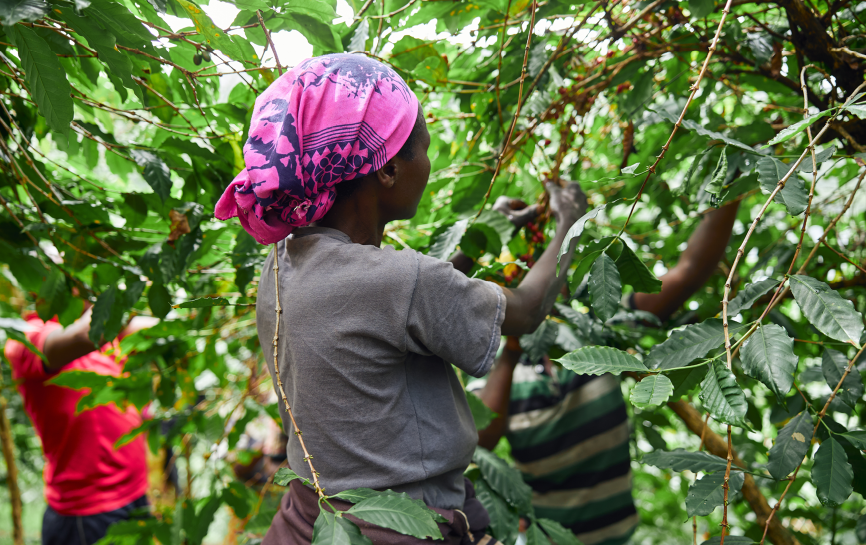
Women on coffee and tea farms face discrimination in relation to their wages, job positions, and involvement in decision-making.
The Limits of Audits and Certification
for Protecting Women
Upwards of 50 percent of the coffee grown globally is certified by sustainability schemes; this proportion is closer to 25-30 percent for tea. Many companies rely on these certifications to provide assurance that farm workers, including women, are protected. However, certification schemes vary widely in how effectively they address fair, safe, and healthy labour conditions.
It is also widely recognised that certification and social auditing alone cannot guarantee full human rights protections. This is due to several factors, including these schemes’ auditing methods. Audits are often based on limited, periodic site visits, which makes it difficult to detect hidden labour abuses. Employers may actively conceal abuses; workers may be coached on how to answer auditors’ questions or may not feel comfortable sharing complaints with someone who is unfamiliar. This is particularly true for sensitive issues that predominantly affect women, such as sexual harassment and abuse.
What Meaningful HRDD Looks Like
for Women Workers
To supplement certification and social auditing, companies should undertake broader human rights due diligence (HRDD), with a particular focus on gender-related risks where these are known to exist. Effective HRDD is a comprehensive and robust process of mitigating risk and remediating harms. HRDD is less daunting when approached with a mindset of continuous improvement.
In practice, HRDD should include activities beyond certification, such as additional risk monitoring, supplier capacity building, awareness raising, and training for farmers and workers, and strengthening grievance mechanisms to enable vulnerable workers to raise issues and have them handled effectively, without fear of reprisal. It can also include investment in programs to reduce workers’ or women’s vulnerability to labour abuses at origin.
Every cup of coffee or tea reflects the labour of many hands, including women whose contributions are often overlooked.
Supporting Women Workers
Fortunately, awareness is growing about the challenges faced by the women who produce coffee and tea. With this awareness has come greater support from companies, civil society organisations, governments, and multistakeholder collaborations.
For example, a variety of programs have been developed to support women on tea estates in South Asian origins. These programs provide direct, person-to-person support to help women access government and other social services, such as health care, as well as improved toilet and sanitary facilities and training for women on hygiene practices. Some programs have established grievance committees on tea estates, training committees on how to receive, handle, and resolve grievances in a gender-sensitive manner. Still others have provided training to estate managers and supervisors on gender discrimination, and training for women on the skills and knowledge needed for leadership and managerial roles.
In East Africa, multi-stakeholder collaborations have emerged to address GBVH on tea estates. In Kenya, after a high-profile media exposé, a coalition of organisations including local Civil Society Organizations (CSOs), certification organisations, companies, and government bodies joined together to develop an action plan to tackle the root causes of GBVH. The action plan aims to ensure that women have a safe working environment, that victims of GBVH have medical support, and that auditors who monitor tea estates have the proper training in detecting and reporting signs of sexual harassment and exploitation in the workplace. Members of the coalition have also committed to skilling-up women on the estates for leadership positions, and training male workers and management on appropriate behaviours towards women.
Latin American origins have witnessed a proliferation of different programs to promote women’s empowerment in coffee. These efforts include programs that promote recognition of women’s roles in households and communities and generating awareness among men regarding gender roles, enable women to be decision-makers through financial literacy training and access to financial capital, such as transparent, self-managed revolving credit funds, as well as support for entrepreneurship, and provide trainings to women coffee farmers in good agricultural practices and post-harvest processing techniques, ensuring access to technical assistance and resources for infrastructure improvements.
Moving Forward
For companies, the takeaway is not that these challenges are too complex to act on, but that they require more focused attention. Identifying risks that women workers face means asking different questions and paying closer attention to where risks show up differently for women than for men. Because many of these risks are systemic, they call for systems-level responses that are part of an ongoing human rights due diligence process that can identify, address, and prevent harm over time.
Every cup of coffee or tea reflects the labour of many hands, including women whose contributions are often overlooked. Bringing greater visibility to their work – and responding with approaches that reflect their realities – is essential to building more ethical and sustainable supply chains.
About the author
 Rachel Rigby is a senior sustainability leader with 20 years of experience driving social impact, due diligence, and respect for labor rights in global supply chains. She has deep knowledge of best practices in sustainability and ESG policies and frameworks in the agriculture sector, and a strong track record of building international and multi-stakeholder partnerships. Rachel leads Verité’s Extended Supply Chain Programs practice group and oversees the Verité Farm Labor Due Diligence Initiative.
Coffee, Tea