By Rachel Rigby, Senior Director, Extended Supply Chains and Responsible Sourcing
As forced labor enforcement expands and human rights due diligence expectations rise, many companies are investing more heavily in training and capacity building across their supply chains. But a critical question remains: what kind of training has the biggest impact?
This question surfaced directly during a recent Verité webinar, Navigating Legal Risks and Import Bans in the Coffee Sector, when a participant asked:
Does training workers on their rights actually reduce forced labor risk or is it more effective to focus first on recruiters, intermediaries, and suppliers?
The answer points to an important lesson for effective due diligence:
Training works best when it is sequenced, nested, and supported by functioning systems.
Training Must Be Cascaded Across the Supply Chain
Our response emphasized that there is no single target group that can be trained in isolation.
Effective prevention requires a cascaded and nested approach, in which multiple target groups are trained and understand both the fundamentals of forced labor risk and their specific roles in preventing and addressing it.
In practice, this often begins inside the company.
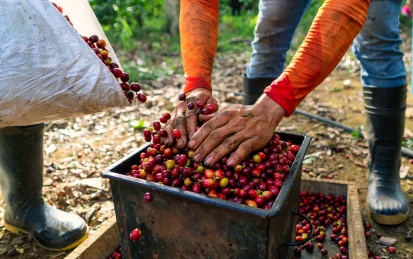
Companies first train their own staff on forced labor risks, legal obligations, and internal responsibilities. From there, direct suppliers are trained and held accountable for providing training to the next level of the chain. In agricultural supply chains, this often includes farmers, cooperatives, and field technicians in the first mile, who in turn play a key role in training workers on their rights, working conditions, and access to grievance mechanisms. Where risks are high, companies at any level of the chain can, and should, invest in and support training in the first mile to sure it is robust and effective.
When training is aligned across levels, each target group understands not only what forced labor is, but what they are responsible for doing when risks arise – and this includes workers

Why Training Workers Without Systems Can Backfire
One of the most important cautions from the discussion concerned timing.
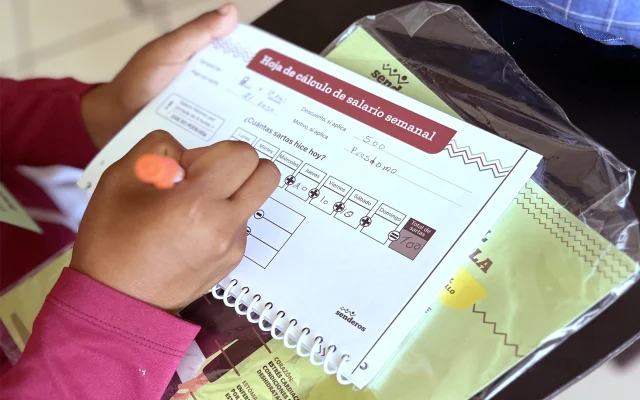
Training workers on their rights and on how to access grievance mechanisms is essential—but only when those systems are actually in place and functioning.
In global agrifood systems, workers often have the least power. Encouraging them to raise concerns when grievance channels are weak, inaccessible, or untrusted can expose them to retaliation or leave complaints unresolved.
This is why sequencing matters. Companies must ensure that reporting channels, investigation procedures, remediation systems, and protections against retaliation are established before asking workers to use them. And this work is urgently needed.
Nested Training Helps Create Pathways to Remedy
A cascaded approach helps ensure that when workers do speak up, the system is prepared to respond.
Supervisors understand their obligations. Suppliers know how to escalate issues. Companies have internal teams trained to investigate and remediate. And workers can exercise their rights with confidence that their concerns will be taken seriously and handled safely.
This alignment is what turns training from a compliance exercise into a meaningful prevention and remediation tool.
Building Capability Beyond the Corporate Tier
Verité offers practical, field-tested guidance to help companies design and implement training for suppliers and first-mile actors—critical participants who are too often missing from human rights action plans.
Verité’s Farm Labor Due Diligence Toolkit positions training and capability-building as core aspects of effective human rights due diligence. Within the Cease, Prevent, and Mitigate step, the toolkit offers practical guidance and curated resources to help suppliers strengthen internal systems, improve business practices, track and report data, and reduce the drivers of labor risk.
Verité’s First Mile Toolkit complements this approach with training guidance for key actors at the start of the supply chain—from company staff and service providers to agronomists, farmers, and workers.
Strengthening labor rights protections across complex supply chains requires sustained investment. Companies cannot address every risk at once, making a continuous improvement approach both practical and necessary.
About the author
 Rachel Rigby is senior sustainability leader with 20 years of experience driving social impact, due diligence, and respect for labor rights in global supply chains. She has deep knowledge of best practices in sustainability and ESG policies and frameworks in the agriculture sector, and a strong track record of building international and multi-stakeholder partnerships. Rachel leads Verité’s Extended Supply Chain Programs practice group and oversees the Verité Farm Labor Due Diligence Initiative.
FLDDI