Search results
Showing results 131-140 of 406 for "forced_labor/page/35/_gravityform_id=4/page/11/page/13/page/14/page/15/page/16/page/14/page/15/page/14/page/15/page/17/page/16/page/31/page/11/page/13/"
Health and safety challenges for home-based garment workers in Argentina
The garment workshop fires at Luis Vial in 2006 and Calle Páez in 2015 put the spotlight on the conditions in which work is carried out in informal workshops. In the last several years, as this workforce has moved out of the workshops and into individual homes, labor risks have increased due to a lack...

Home-based garment production in Argentina: A hazardous business
The garment workshop fires at Luis Vial in 2006 and Calle Páez in 2015 put the spotlight on the conditions in which work is carried out in informal workshops. In the last years, as this workforce has moved out of the workshops and into individual homes, labor risks have increased due to a lack of...

COFFEE Toolkit
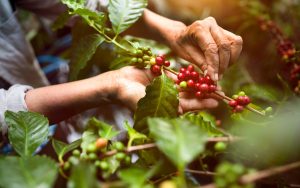
The COFFEE Toolkit offers actionable guidance for all coffee supply chain actors, from producers to brands, addressing the most critical labor risks. The Toolkit includes 20 downloadable and printable tools, 7 videos, and the interactive Risk Evaluation for Action in the Coffee Trade (RE-ACT) Dashboard. Developed in close alignment with USDOL’s Comply Chain Framework, all...

Responsible Sourcing Tool: Private Security Industry Tools Launch Webinar
Is human trafficking hidden in your private security supply chain? This webinar offers companies in the private security sector concrete strategies, tools, and processes to address and prevent human trafficking in their labor supply chains in accordance with the Federal Acquisition Regulation (FAR) “Combating Trafficking in Persons.”

Discrimination against women in the coffee farming sector
This video explains what discrimination is, how women are discriminated against, and what coffee producers can do to recognize, prevent, and eliminate it. It was developed for the COFFEE Project and is part of the COFFEE Project Toolkit, which focuses on creating a virtuous cycle of continuous improvement to address labor risks in company supply...

For brands
This section of the Fair Hiring Toolkit asks the question: 'What can brands do?'. There are many steps that brands can take within their own operations and supply chains to prevent, detect and remediate the human trafficking and forced labor of migrant workers.
For suppliers
This part of the Fair Hiring Toolkit asks the question: 'What can suppliers do?' Guidance for suppliers on preventing forced labor and exploitation in recruitment and hiring.
 Update
19 December 2022
Update
19 December 2022
Forced Labor Indicators in Côte d’Ivoire and Ghana
The Forced Labor Indicators Project (FLIP) collaborated with government, civil society, trade unions, and private sector stakeholders in Ghana and Cote d'Ivoire to conduct 15 trainings in 2022, facilitating exchange of learnings and co-creation of materials and resources for diverse stakeholders, and encouraging cooperation in addressing forced labor and trafficking risk in both countries.

 Editorial
11 December 2023
Editorial
11 December 2023
G7 Don’t Miss the Boat on Human Rights
Recently in Osaka-Saki, Japan, the G7 Trade Ministers convened to discuss key issues affecting the global trading system and the topic of fishing subsidies was high on the agenda. Each year, governments worldwide provide an estimated $35.4 billion to subsidize their fishing fleets and over 60% of these subsidies go to commercial fishing that contribute to depletion of the world’s fish stocks. The G7 Ministers pledged to work on additional provisions to the historic agreement struck last year by the World Trading Organization (WTO) to reform fishing subsidies. The call for action was to seek greater alignment with Sustainable Development Goal 14.6, which addresses overfishing and Illegal, unreported, and unregulated (IUU) fishing.
 Editorial
24 October 2022
Editorial
24 October 2022
When Coffee Farmers Face Crises, Farmworkers Suffer Most
Labor is the single largest component of most coffee farmers’ costs of production. In Latin America, for example, labor accounts for the majority of production costs.