Search results
Showing results 81-90 of 406 for "forced_labor/page/35/_gravityform_id=4/page/11/page/13/page/14/page/15/page/16/page/14/page/13/page/12/page/21/page/22/page/20/page/51/page/10/page/11/"
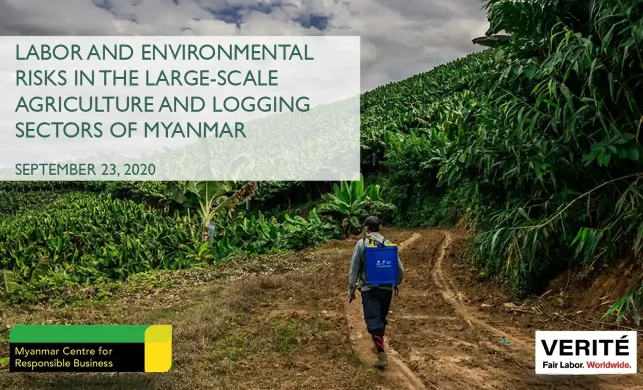
Labor and Environmental Risks in Agriculture and Logging Sectors of Myanmar
A cross-sector study revealing how deforestation, weak governance, and rural poverty intertwine to heighten risks of forced labor in Myanmar’s forestry and agriculture industries. This research explores the link between environmental degradation and labor exploitation across Myanmar’s forestry and agricultural sectors. Drawing on case studies in logging and banana plantations, it shows how deforestation and...
Simple Supplier Screening Tool for Suppliers and Traders of Agricultural Materials
Developed as part of Verité’s Farm Labor Due Diligence Toolkit, this straightforward screening tool helps companies make more informed, responsible sourcing decisions. Created for procurement and purchasing teams, it provides an easy way to assess prospective suppliers’ understanding of human rights and their capacity to manage related risks. Adaptable across supplier types and contexts, it...

Financial and Contractual Approaches to Mitigating Foreign Migrant Worker Recruitment-Related Risks
A detailed examination of how financial and contractual tools can help companies reduce the risk of forced labor linked to migrant worker recruitment. This paper explores how global companies can use financial levers—like responsible purchasing, fee repayment, and contract design—to protect migrant workers from debt bondage and recruitment abuse. It outlines practical measures that shift...

Toolkit for Assessing Respect for Workers’ Rights to Freedom of Association (FoA) and Participation
This toolkit is tailored to evaluate facility-level systems and practices concerning workers’ Freedom of Association (FoA) rights and participation. Comprising seven tools, the main Excel tool encompasses 120 assessment criteria covering FoA rights, collective bargaining, union effectiveness, communication, feedback mechanisms (including grievance procedures), and worker participation. Tools available in English and Chinese.

Human & Labor Rights Risk Assessments: Guidance for Agricultural Cooperatives and Farmer Organizations
A practical guide to help farmer organizations identify, understand, and mitigate human rights risks within their communities and supply networks. Designed for agricultural cooperatives and farmer groups, this guidance outlines good practices for preparing and conducting human and labor rights risk assessments. It walks users through selecting tools, gathering data, training field staff, and prioritizing...
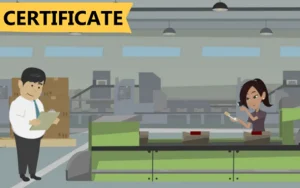
Understanding Forced Labor & Child Labor Risk, Traceability, and Due Diligence
This self-guided tutorial introduces the different forms and types of forced labor and child labor. It is designed to help support mid-tier suppliers in understanding what to look for – in your own operations and when sourcing materials – if you are asked to conduct due diligence by your customers or other supply chain partners....

Forced Labor Indicators Project in West Africa
The Forced Labor Indicators Project (FLIP) worked with government, private sector, trade union, and civil society stakeholders to combat the risk of forced labour of adults and children in Benin, Ghana and Côte d’Ivoire. As part of this initiative, Verité produced free educational materials to help users understand the ILO’s definition of forced labour and...

Forced Labor and Corruption in Supply Chains
Tackling forced Labor and corruption: An FCPA enforcement case study. This module will help make the connections between forced labor and corruption clear to a range of actors with the potential to act on this understanding. It describes how common practices across the foreign worker recruitment process can represent red flags for corruption and forced...
Forced Labor Enforcement is Brewing: Navigating Legal Risks and Import Bans in the Coffee Sector
In this webinar, Forced Labor Enforcement is Brewing: Navigating Legal Risks and Import Bans in the Coffee Sector, learn about the current climate of legal risk in the coffee sector, what Verité’s experience in other sectors tells us about what could come next, and actions companies should be taking now to ensure workers in their supply chains are respected and saf
Responsible Sourcing Tool
The Responsible Sourcing Tool (RST) website provides information and tools to support companies, federal contractors, federal procurement professionals, advocates, investors, consumers, and others in their efforts to prevent and address human trafficking, including forced labor, in global supply chains. The RST includes sector-specific Due Diligence Toolsets with a model Compliance Plan for the U.S. Federal...