 Editorial
2 October 2024
Editorial
2 October 2024
Search results
Showing results 241-250 of 406 for "forced_labor/page/34/_gravityform_id=4/page/30/page/50/page/47/page/20/page/10/page/12/page/11/page/13/page/12/page/20/page/22/page/24/page/26/page/27/"
Editorial
2 October 2024
What Does It Mean to Embed Human Rights in Business Management Systems?
Embedding human rights means integrating them into your company's DNA, its culture, strategy, and daily operations. It's about placing human rights on par with other core business priorities like efficiency, quality, cost, and environmental sustainability. This requires a fundamental shift in how businesses perceive their role and responsibilities in the global economy, moving beyond mere compliance to proactive engagement with human rights issues.

Burundi
Burundi’s fragile economy, marked by instability and widespread poverty, leaves its agricultural and mining sectors particularly vulnerable to trafficking risks. Agriculture, including coffee, tea, and subsistence farming, as well as artisanal gold mining, involves child, migrant, and informal labor exposed to coercion and forced labor indicators. Reports identify trafficking threats tied to export supply chains,...

Gabon
Persistent urbanization, corruption, and legal gaps in Gabon weaken labor protections and elevate trafficking risks. Gabon’s oil-dependent economy delivers upper‐middle income status, but this wealth masks widespread inequality and entrenched corruption, especially in public institutions and extractive industries. Weak enforcement of child labor and forced labor laws—particularly in informal sectors like forestry and fishing—disproportionately affects...

Benin
Benin’s high levels of informal work and regional migration deepen vulnerabilities to trafficking, especially among youth and children. Roughly 90% of young people aged 15–29 are engaged in informal employment, which leaves them exposed to forced labor, child labor, and human smuggling. The deep-rooted practice of vidomegon—sending children to wealthier homes for education—has increasingly become...
 Editorial
28 February 2022
Editorial
28 February 2022
World Vision y su Rol para Mejorar la Vida de Las y Los Trabajadores
La tierra sigue siendo un lugar muy injusto para muchos. No es ninguna novedad que hay millones de personas viviendo en condiciones vulnerables, sin posibilidad de cubrir sus necesidades básicas o lograr su pleno desarrollo. Las brechas de desigualdad se han vuelto cada vez más difíciles de cerrar, pero un mundo así no debe ni puede continuar. Todas las personas merecen una oportunidad y, para ello, se necesita una transformación humana que mejore las condiciones de vida. _______________________________________ World Vision and Its Role in Improving Workers' Lives: Our planet is still a very unfair place for many. It is no news that there are millions of people living in vulnerable conditions, unable to meet their basic needs or achieve their full development. Inequality gaps have become difficult to close, but such a world should not and cannot continue. Everyone deserves a chance, and this requires a human transformation to improve living conditions.
 Webinar
5 March 2024
Webinar
5 March 2024
Building Management and Worker Capacities to Advance Worker Participation
Worker participation is often overlooked as a strategy for building a competitive, sustainable business that can keep up with rapidly evolving social and legal standards in global supply chains. Even in countries where workers’ rights to freedom of association (FOA) are extremely limited due to national laws or the lack of government enforcement, corporations can still ensure workers in their supply chain have access to effective grievance mechanisms and systems that ensure workers have a say in workplace matters.
Nigeria
Instability in the northeast and an economy split between agriculture and oil deepen Nigeria’s trafficking vulnerabilities across labor sectors. Nigeria is experiencing its longest stretch of civilian rule, though terrorism by groups like Boko Haram and ISWAP continues to destabilise regions like the northeast and southeast. While oil and gas dominate export earnings—accounting for over...

Guinea
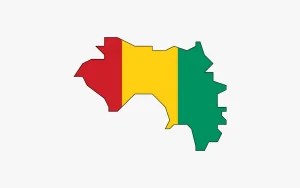
Guinea’s heavy dependence on mining, agriculture, and weak labor protections leave workers—and especially children and migrants—highly vulnerable to trafficking. As a low-income nation with low human development, much of the labor force remains in informal agriculture and artisanal mining, particularly in gold and diamond sectors, while fisheries also contribute to exports. The U.S. TIP Report...
 Update
16 December 2022
Update
16 December 2022
Farm Labor Due Diligence in 2022
The Farm Labor Due Diligence Initiative is a Verité-led collaborative launched in 2022 to help define and support good human rights due diligence in global agricultural supply chains. The project centers on creation of open-source tools and other resources and is supported by an Advisory Council of leading companies and civil society organizations.

Practical How-To Training on Key Due Diligence Tools in the Mining and Transportation Sectors
Hands-on implementation guidance for procurement and due diligence professionals in the transportation, mining, and other key industries with step-by-step workflows, live demonstrations, and expert Q&A. Learn how to effectively deploy these tools across your organization with practical examples and real-world case studies.
