 Editorial
11 April 2023
Editorial
11 April 2023
Search results
Showing results 161-170 of 406 for "forced_labor/page/34/_gravityform_id=4/page/30/page/20/page/18/page/16/page/15/page/13/page/14/page/15/page/13/page/12/page/13/page/15/page/16/"
Editorial
11 April 2023
CUMULUS at CBP Forced Labor Technical Expo
On March 14, 2023, Verité’s CUMULUS Forced Labor Screen™ platform was showcased at CBP’s Forced Labor Technical Expo at the International Trade Center in Washington, D.C. The two-day in-person and live-streamed event focused on technical solutions to supply chain mapping, risk assessment, and transparency to facilitate compliance with the U.S. ban on imported goods made in whole or in part using forced labor.

 Update
15 July 2025
Update
15 July 2025
Due Diligence Theory Meets Real-World Application
Verité’s Farm Labor Due Diligence Toolkit in Action in the West African Cocoa Sector As many practitioners have found, the theory of human rights due diligence may look straightforward on paper, but putting it into practice is a complicated, creative, continuous process – and one that is crucialto ensuring respect for the people behind every...
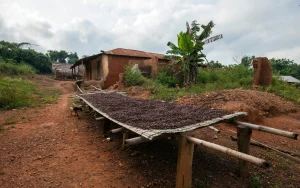
Coffee
Coffee production is central to rural livelihoods in Sub-Saharan Africa, yet the sector’s reliance on low-paid, seasonal labor creates trafficking risks. Ethiopia, Uganda, Kenya, Tanzania, and Côte d’Ivoire are among the largest exporters, where cultivation and harvesting depend heavily on manual work. Children and migrant workers are drawn into hazardous tasks, while weak oversight, informal...
 Editorial
28 January 2026
Editorial
28 January 2026
Brazil’s Dirty List: Impact, Limits, and What It Means for Companies
Brazil’s Lista Suja—the “Dirty List” of employers found to have subjected workers to conditions analogous to slavery, remains one of the most influential forced labor accountability tools in the world.
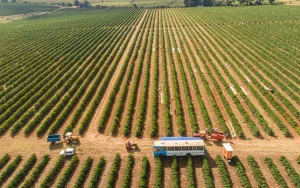
Fish
Fish and seafood production is closely tied to forced labor, child labor, and human trafficking in both wild capture and aquaculture. Long hours, hazardous conditions, and abusive recruitment systems put workers at risk, while opaque, multi-tiered supply chains and weak oversight make exploitation difficult to detect. Transnational vessel operations, debt bondage, and deceptive “share” payment...
 Editorial
21 June 2022
Editorial
21 June 2022
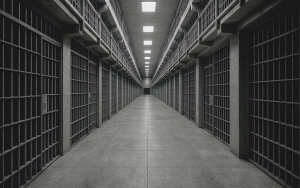
Work Behind Bars
The U.S. prison system has been under increasing scrutiny in recent years for issues such as systematic racism, inhumane conditions, overcrowding, and sexual violence. While these issues are extremely pressing, another important issue, forced prison labor, is often overlooked. Therefore, as a labor rights organization, Verité determined that we could most effectively contribute to the critique of the U.S. prison system by lending an international human rights lens to the conversation on prison labor.
Workshops and home-based production: The hidden costs of the garment industry
In Argentina, employers, intermediaries, and workshop owners are jointly responsible for the wages, health, and social security of home-based garment workers. In practice, these workers have no bargaining power and bear the costs of inputs and production risks as if they were small business owners.

Between care and production: Life inside the home workshop
The fashion industry must produce large volumes in a short time, due to seasonal demand fluctuations. Employers must ensure regular hours and a minimum wage. When production is moved to workers’ homes, pressure increases and working hours are extended to avoid penalties, discounts, or threats.
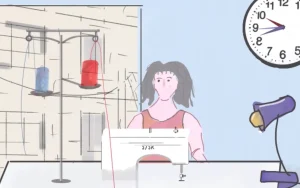
Flexibility or precarity: The thin line of informal work
The difficulties in finding formal employment that is compatible with caregiving responsibilities lead many people to accept flexible jobs. This allows them to balance certain tasks, but it should not reduce their responsibilities to their employer or deteriorate their working and family conditions.

Cotton
Cotton is produced in many countries where forced labor and child labor have been reported. In regions across Africa, Asia, and South America—including Benin, Burkina Faso, China, India, and Pakistan—cotton production has been linked to both forced and child labor. Labor intensity, reliance on smallholder farms, chemical exposure, heat stress, and weak oversight all contribute...
