Search results
Showing results 321-330 of 406 for "forced_labor/page/34/_gravityform_id=4/page/20/page/30/page/32/page/30/page/20/page/40/page/30/page/32/"
Mauritania
Colonial-era slavery legacies and weak legal protections leave Mauritania highly exposed to entrenched trafficking vulnerabilities. Despite recent economic diversification, half the population remains engaged in agriculture and livestock herding, while extractive sectors drive GDP growth. Hereditary slavery—especially affecting Haratine and Afro-Mauritanian communities—persists in livestock herding and domestic servitude, including “de facto slave status” after emancipation....

Mauritius
Mauritius’ strong service economy and political stability coexist with migrant labor vulnerabilities in key export sectors. Governed as a stable multiparty hybrid republic noted for generally free elections, Mauritius is classified as an upper-middle-income economy with major growth in services, especially tourism, financial services, and apparel manufacturing. Despite its economic strength and high ease-of-doing-business ranking,...

 Update
31 December 2015
Update
31 December 2015
A New Resource For Eliminating the Recruitment Fees Charged to Migrant Workers
Important steps have been taken recently to put responsible recruitment firmly on the agenda of businesses around the world. In November at the UN Forum on Business and Human Rights, several panels discussed solutions to recruitment abuses. The issues were also featured prominently at the annual Trust Women Conference in London while recruitment and labor migration were key features of discussions at this year’s Global Forum on Migration and Development in Turkey. These are encouraging times for advocates of responsible recruitment in supply chains.

 Webinar
30 August 2024
Webinar
30 August 2024
Launch of Verité’s Farm Labor Due Diligence Toolkit - Demystifying Human Rights Due Diligence for Companies, Suppliers, and Traders Sourcing Agricultural Commodities
This webinar is for companies, suppliers, and traders seeking to understand and implement human rights due diligence in agricultural supply chains. Join Verité for the launch our new Farm Labor Due Diligence Toolkit, a groundbreaking, free resource to help companies tackle challenging human rights issues – including on farms and in the “first mile.”

Julie Brown
Julie leads Verité’s Training Center as an expert in instructional design, developing comprehensive educational programs for multinational companies and institutions working to identify and prevent human rights risks in global supply chains. Her work spans strategic due diligence training for executive leadership and technical skills development for auditors and suppliers operating in high-risk sectors. Over...

Sudan
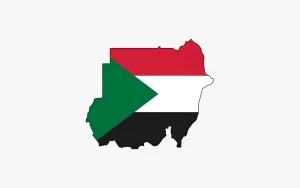
Decades of conflict, displacement, and economic instability leave Sudan critically exposed to trafficking across its primary labor sectors. Ongoing unrest has produced over a million displaced people and severely weakened governance. Sudan’s economy relies heavily on gold (about 70% of exports) and livestock, but remains fragile, with negative capital flows, poor business environment, and low...
 Editorial
24 October 2022
Editorial
24 October 2022
Reflections on Workers’ Rights to Safe and Decent Conditions
Dhaka Principle 7 – Working conditions are safe and decent - the vital principle to ensure migrant workers enjoy safe and decent conditions of work, free from harassment, any form of intimidation or inhuman treatment. They should receive adequate health and safety provision and training in relevant languages.
 Update
17 December 2024
Update
17 December 2024
Asia: Mapping Migrant Worker Finances and Uncovering Hidden Burdens
In the complex landscape of global labor rights, meaningful change requires looking deeper than surface-level compliance. Verité’s workplace assessments are grounded in a worker-centered approach, enabling us to uncover systemic labor challenges and expose their root causes. Throughout Asia, Verité’s comprehensive Foreign Migrant Worker Assessments employ rigorous, triangulated methodologies that translate into tangible worker protections. By employing forensic, investigative techniques our team uncovers complex, financial exploitation associated with migrant workers' recruitment experiences.
 Update
11 April 2023
Update
11 April 2023
Training Session with Sugarcane Workers
As part of the SENDEROS Project's services to the Tala supply chain in Jalisco, a training session with 16 sugarcane workers took place in the Ameca municipality. In Tala, sugarcane harvesters are mainly local residents. The training covered the Biological Risks (occupational safety and health) topic showcasing how to identify dangerous animals in the region and act in case of an attack. This module also included recommendations on the COVID-19 topic.

Palm oil
Africa’s growing palm oil sector, anchored by top exporters like Côte d’Ivoire, Kenya, Gabon, Liberia, Uganda, carries serious human trafficking risks Roughly 70% of production comes from smallholders who lack credit and market access, while large-scale plantations drive land displacement and environmental harm. Workers face hazardous conditions, including pesticide exposure and weak protection, while child...
