Editorial
17 August 2023
Editorial
17 August 2023
Search results
Showing results 201-210 of 406 for "forced_labor/page/34/_gravityform_id=4/page/20/page/21/page/20/page/18/page/16/page/17/page/15/page/13/page/14/page/15/page/10/page/30/page/50/page/30/page/29/page/50/page/10/page/20/page/18/page/20/"
Editorial
17 August 2023
Verité’s CEO publishes a new book chapter on the Model Contract Clauses Project
Verité’s CEO Shawn MacDonald, who has spent more than 25 years advocating for effective labor policies and practices through civil society advocacy, contributed to the Model Contract Clauses Project with the book chapter A Supply Chain Accountability Practitioner’s Perspective on the Model Contract Clauses Project. The chapter is part of the newly published American Bar Association (ABA) book Contracts for Responsible and Sustainable Supply Chains: Model Contract Clauses, Legal Analysis, and Practical Perspectives.

 Update
1 April 2021
Update
1 April 2021
Supporting the Labor Movement and People of Myanmar
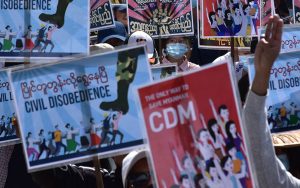
Verité and Verité Southeast Asia stand in solidarity with the labor rights movement and the people of Myanmar in condemning the military coup which took place on February 1, 2021. Furthermore, Verité and VSEA strongly denounce the violent crackdown perpetrated by the Myanmar military and police forces against its citizens practicing their right to peacefully protest.
Rubber
Rubber, a vital global raw material, is frequently tied to forced and child labor in several producing countries. Production methods span large plantations and smallholder farms, but the labor-intensiveness—especially the tapping of rubber trees—exposes workers to hazards like skin and eye injuries, snakebites, acid exposure, heavy lifting, and back strain. Layers of middlemen and batch‑mixing...
 Update
15 July 2025
Update
15 July 2025
New resource spotlight: Case Study on Piloting a Forced Labor Survey Tool to Identify and Assess Risks in Cocoa Production in the West African Cocoa Sector
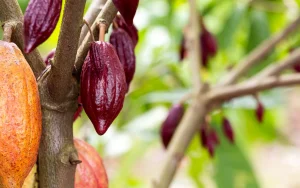
This case study discusses the changing global context for human rights due diligence and how one global agricultural trading company is preparing itself to identify, assess, and respond to forced labor risk in its cocoa supply chains. Organizations looking to strengthen their forced labor identification and response capabilities can learn from this company’s approach to...
Cotton
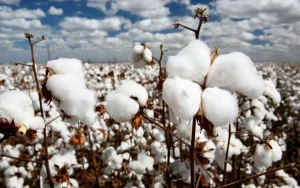
Cotton’s role as a cash crop in West and Central Africa brings economic importance but also deep trafficking risks. Smallholder farms—often under three hectares—rely on manual, labor‑intensive seasonal work. Complex, hard-to-trace supply chains, coupled with child, migrant, and casual labor, as well as labor intermediaries, increase vulnerability to exploitation. The U.S. Department of State has...
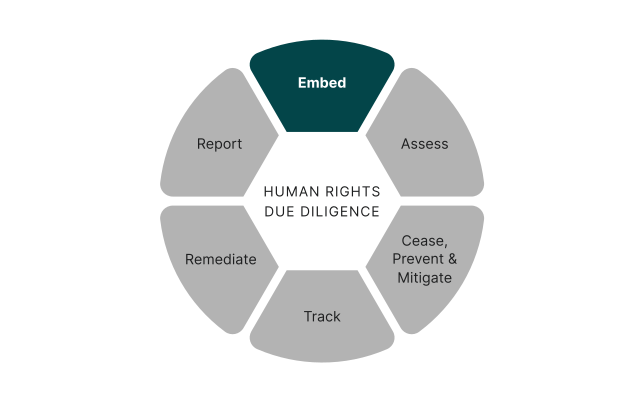
Embed
Embedding human rights into a company’s management systems means making human rights an integral part of the company’s business culture and day-to-day operations, similar to other core business priorities such as efficiency, quality, cost, and environmental sustainability.
Melon
Melon production is linked to child labor in countries such as Honduras, Mexico, Panama, and Paraguay. Cultivation and harvesting are labor-intensive, involving hazardous tasks like tilling, pesticide application, and bee management. Despite these risks, workers often face limited oversight and weak protections. Efforts to address these issues include union advocacy in Honduras and international projects...
 Update
29 October 2018
Update
29 October 2018
Barriers to Ethical Recruitment: Action Needed in Taiwan
The most significant contributor to the ongoing presence of debt bondage or forced labor in global supply chains is the burden of recruitment fees and expenses on migrant workers. Many employers and recruiters in high risk global supply chains build business models on charging unskilled and low-skilled workers fees for employment. Specifically, employers pay no or insufficient professional service fees to the recruitment agents they engage to find them workers. Rather, they knowingly allow agents to recoup revenue and the significant legitimate expenses associated with international labor migration—such as government approvals and travel costs—from the workers themselves.

Tanzania
Tourism shocks and fragile governance deepen trafficking risks in Tanzania’s agriculture, mining, and fishing sectors. Tanzania’s tourism-dependent economy was hit hard by COVID-19, and its low-middle-income status conceals persistent poverty—over 57% of the population lives in multidimensional poverty. Labor risks surface prominently in agriculture, mining, and fishing: children are forced into work as herders, on...
 Update
2 July 2025
Update
2 July 2025
Conclusion of the STREAMS Project
As of March 26, 2025, the Supply Chain Tracing and Engagement Methodologies (STREAMS) project has concluded due to the termination of all grant funding from the US Department of Labor’s Bureau of International Labor Affairs.