 Editorial
16 August 2023
Editorial
16 August 2023
Search results
Showing results 171-180 of 406 for "forced_labor/page/28/_gravityform_id=4/page/5/page/50/page/47/page/45/page/10/page/20/page/19/"
Editorial
16 August 2023
Verité leads panel discussion with Better Cotton and USDOL on traceability for sustainable cotton at Better Cotton’s Annual Conference
As part of Verité’s Supply Chain Tracing & Engagement Methodologies (STREAMS) project, Erin Klett, Director of STREAMS, led a panel discussion with STREAMS partner Better Cotton and the U.S. Department of Labor at the annual Better Cotton Conference in Amsterdam in June. Traceability and data were at the forefront of this two-day conference, which brought together 350 industry leaders from 38 countries to explore the most salient issues in sustainable cotton production.

 Update
16 December 2022
Update
16 December 2022
CUMULUS Forced Labor Screen in 2022
In 2022 Verité’s patented, secure, technology-driven CUMULUS Forced Labor Screen™ system implemented a new Employer Pays Verification feature and surpassed a major milestone, having proactively screened more than 1,000 entities in global supply chains for the presence of the ILO forced labor indicators.
 Editorial
11 April 2023
Editorial
11 April 2023
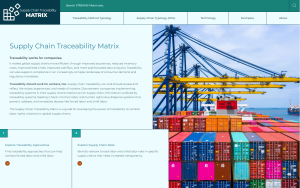
The Supply Chain Traceability Matrix
Do you have questions about traceability in supply chains? Are you interested in learning about how different traceability approaches can enhance due diligence goals? The STREAMS Supply Chain Traceability Matrix (the Matrix) seeks to address these questions and more. The Matrix will help users understand how to use traceability elements, methods, and technologies to design traceability systems that can address forced labor and child labor risks in diverse supply chains.
 Editorial
31 March 2022
Editorial
31 March 2022
Responding to Refugee Vulnerability to Trafficking: Ukraine and Beyond
The political and humanitarian crises in Ukraine are reshaping the landscape for supply chain accountability throughout the broader region. More than 4 million refugees have fled Ukraine into neighboring countries, according to the UN. Prior to the Ukraine crisis, the numbers of internally displaced people and refugees globally were already at record highs, with more than 26 million Syrians, Central Americans, Venezuelans, South Sudanese, Rohingya, and others living as refugees abroad, and more than 84 million people around the world forcibly displaced in the first half of 2021.
 Update
16 December 2022
Update
16 December 2022
STREAMS in 2022
As part of the Supply Chain Tracing and Engagement Methodologies (STREAMS) project, Verité developed the Supply Chain Traceability Matrix. Launching in early 2023, the Matrix is an accessible, interactive platform to learn how different traceability methods can be used to combat labor abuses in global supply chains.
Cocoa
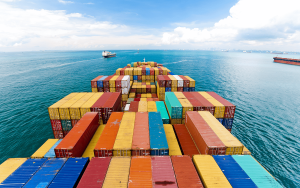
Cocoa, the foundation of many beloved global products, is linked to forced and child labor in multiple producing countries. Complex supply chains, seasonal labor demands, and widespread vulnerabilities—such as hazardous work, indebtedness, and migrant worker exploitation—amplify social and environmental risks across cocoa production regions.

Tobacco
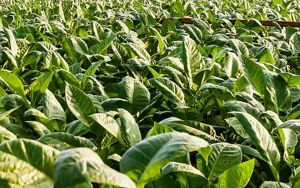
The cultivation and processing of tobacco involve complex production systems that are consistently linked to labor exploitation. Tobacco is widely reported to involve child labor, and in some contexts both forced and child labor, across major producing regions. Work is labor-intensive, requiring manual sowing, transplanting, weeding, topping, and hand-harvesting, followed by curing, cleaning, and further...
 Update
11 August 2025
Update
11 August 2025
New Responsible Sourcing Tools for Mining and Transportation: 3-Part Webinar Series
This webinar series is supported by the U.S. Department of Transportation and U.S. Department of State as part of ongoing efforts to strengthen supply chain due diligence while effectively navigating federal compliance.
 Editorial
11 December 2023
Editorial
11 December 2023
Due Diligence Training for US Government Officials
The United States and other governments are creating laws and regulations to require more effective management and prevention of these risks by those who sell goods and services to the government and by those who import goods into the US and other countries. As a result, government officials of many types – from contracting and procurement officials to Congressional staff – are increasingly engaged in matters related to labor and human rights risks in global supply chains.
 Update
12 April 2021
Update
12 April 2021
Promoting Ethical Recruitment in the Coffee Sector of Minas Gerais, Brazil
Verité research has found that the use of labor brokers (including village-level agents, recruiters, labor contractors, and crew leaders) is widespread throughout the Latin American coffee sector, including in Brazil.
