Editorial
11 December 2023
Editorial
11 December 2023
Search results
Showing results 211-220 of 406 for "forced_labor/page/28/_gravityform_id=4/page/11/page/13/page/21/page/31/page/41/page/40/page/10/page/12/page/20/page/18//page/10//page/20/page/21"
Editorial
11 December 2023
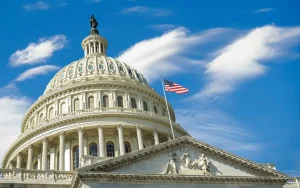
Due Diligence Training for US Government Officials
The United States and other governments are creating laws and regulations to require more effective management and prevention of these risks by those who sell goods and services to the government and by those who import goods into the US and other countries. As a result, government officials of many types – from contracting and procurement officials to Congressional staff – are increasingly engaged in matters related to labor and human rights risks in global supply chains.
 Update
12 April 2021
Update
12 April 2021
Promoting Ethical Recruitment in the Coffee Sector of Minas Gerais, Brazil
Verité research has found that the use of labor brokers (including village-level agents, recruiters, labor contractors, and crew leaders) is widespread throughout the Latin American coffee sector, including in Brazil.
 Editorial
30 June 2020
Editorial
30 June 2020
Companies Called to Support Waste Pickers, a Global Essential Workforce at Risk
Workers who handle waste and recyclables support the health of our communities, economies, and the environment at the expense of their own health and wellbeing. On a daily basis, they may be exposed to hazardous materials, such as household cleaners, pesticides, and medical waste. The COVID-19 pandemic only heightens these health risks, particularly to informal waste pickers who collect the recyclable materials that we throw in the trash.
 Update
11 December 2023
Update
11 December 2023
Online Training for Procurement Professionals in Healthcare Systems
This is a training developed for professionals in healthcare systems involved in the procurement of goods and services. It examines the risk of forced labor and labor trafficking in healthcare, specifically regarding supply chains and service providers. This free course has no prerequisites.
 Update
30 January 2019
Update
30 January 2019
FAR Definition Takes a Zero-Tolerance Approach to Recruitment Fees
Prohibiting federal contractors from charging workers recruitment fees is a cornerstone of the Federal Acquisition Regulation (FAR) requiring contractors and subcontractors to take specific preventive measures to detect and eliminate forced labor and human trafficking in their supply chains. In December 2018, the U.S. Government amended the FAR to include a comprehensive and clear definition of what constitute “recruitment fees.”
 Editorial
19 November 2020
Editorial
19 November 2020
ATEST Calls for Catalytic Investment to Fight Human Trafficking in Recommendations to Biden Transition Team
The Alliance to End Slavery and Trafficking (ATEST), a U.S.-based coalition that advocates for solutions to prevent and end all forms of human trafficking and forced labor, and of which Verité is a long-time member, recently released its Presidential Agenda for Ending Modern Slavery and Human Trafficking. The report was delivered to President-elect Joseph Biden’s...
 Update
16 December 2022
Update
16 December 2022
Responsible Sourcing Tool in 2022
Verité’s Responsible Sourcing Tool (RST) is a leading public resource on the risks of human trafficking in global supply chains, providing free, practical tools for combatting trafficking risk for U.S. federal contractors and other actors. In 2022, new tools for the facilities services sector were added to the site, with more resources coming soon.
 Editorial
14 July 2021
Editorial
14 July 2021
Two Years. One Coalition.
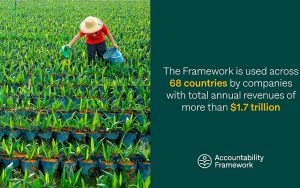
Verité is active on many fronts to bring our labor rights experts together with those protecting the natural environment. We believe strongly that supply chain “sustainability” is best pursued holistically with the needs of people, communities, and ecosystems considered and approached in complementary ways. One significant effort has been our participation in the Accountability Framework Initiative (AFi).
Mali
Persistent political instability and conflict in Mali weaken institutional protections and elevate trafficking risks across agriculture and mining. Since the 2021 coup, Mali has been governed by a military-led transitional administration, with elections delayed and armed groups controlling much of the northern regions. The economy is undiversified and classified as low-income, heavily dependent on volatile...

Kenya
Kenya’s large informal labor force and regional instability strain protections and raise trafficking risks across key supply chains. As a lower-middle-income country, agriculture remains the largest employer, though over 15 million workers (out of 18 million) are in the informal sector, where enforcement of labor protections is weak. Conflict and refugee movement from neighboring states...