Search results
Showing results 281-290 of 406 for "forced_labor/page/21/_gravityform_id=4/page/5/[gravityform id=4/page/30/"
Republic of the Congo
Overdependence on oil revenue and deep inequality sharpen trafficking risks across artisanal and rural sectors in the Republic of the Congo. Oil dominates the economy, with exports including petroleum, copper, wood, tin, and transition metals—but profits largely benefit the political elite, fueling underinvestment in public services and fragile infrastructure. Urban electricity access is limited (40%),...

 Editorial
19 November 2020
Editorial
19 November 2020
ATEST Calls for Catalytic Investment to Fight Human Trafficking in Recommendations to Biden Transition Team
The Alliance to End Slavery and Trafficking (ATEST), a U.S.-based coalition that advocates for solutions to prevent and end all forms of human trafficking and forced labor, and of which Verité is a long-time member, recently released its Presidential Agenda for Ending Modern Slavery and Human Trafficking. The report was delivered to President-elect Joseph Biden’s...
Togo
Political tensions, weak labor enforcement, and informal supply chains increase trafficking risks across Togo’s extractive and export sectors. Togo’s economy heavily relies on export commodities like phosphate, gold, coffee, cocoa, and cotton—yet the benefits are undermined by insecure land rights, industry informality, and economic shocks. Child trafficking risks are flagged in coffee, cocoa, and cotton...

Fruits and nuts
Africa’s fruit and nut sector offers export potential, but seasonal labor spikes and weak oversight raise trafficking risks. Major exporters—South Africa, Côte d’Ivoire, Ghana, Benin, and Cameroon—produce key crops like coconuts, cashews, citrus, pineapples, bananas, and mangoes, though only about 5% of output reaches global markets. The harvesting process depends heavily on casual and migrant...

 Update
16 December 2022
Update
16 December 2022
Responsible Sourcing Tool in 2022
Verité’s Responsible Sourcing Tool (RST) is a leading public resource on the risks of human trafficking in global supply chains, providing free, practical tools for combatting trafficking risk for U.S. federal contractors and other actors. In 2022, new tools for the facilities services sector were added to the site, with more resources coming soon.

São Tomé and Príncipe
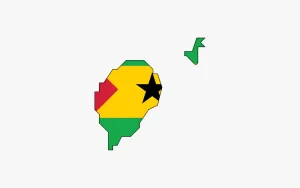
Small island geography, widespread informality, and weak oversight expose São Tomé and Príncipe to trafficking risks. Cocoa, coffee, and palm oil are core exports, while agriculture and tourism shape most livelihoods—even though nearly 90% of the workforce operates informally. Fishing employs around 20% of the population and is especially hazardous, with frequent accidents and underreported...
 Editorial
9 May 2024
Editorial
9 May 2024
Shedding Light on the Financial Burdens of Migrant Workers through Worker-Led Data Collection
As new and emerging human rights due diligence (HRDD) legislation, such as the recently passed EU Corporate Social Due Diligence Directive (CSDDD), gains traction, the demand for transparent and accurate information regarding labor recruitment costs has escalated. As global supply chains grapple with the pervasive issue of debt bondage, a deeply rooted manifestation of forced labor, the urgent need to shed light on the hidden financial burdens shouldered by migrant workers has become critical. The Fostering Fee Accountability and Cost Tracking (FFACT) project, a collaborative effort between Verité and over 10 other civil society organizations (CSOs) in India, Bangladesh, and Malaysia, is addressing the need for transparent, accurate calculations of recruitment costs through worker-led digital

Sugar
Sugar production in Sub-Saharan Africa is closely tied to trafficking and labor abuse through hazardous work, casual labor, and land conflict. Top sugar exporters include South Africa, Swaziland, Mozambique, Mauritius, Uganda, Zambia, Zimbabwe, and Malawi, while Senegal, Malawi, Chad, and others lead in yields. The sector operates through large estates and out‑grower schemes, but these...

For investors
This section of the Fair Hiring Toolkit provides a tailored introduction to the materials for investors. An overview of the most relevant tools and guidance is provided, with an explanation of how these tools can support the work of investors.
For advocates
This section of Verité’s Fair Hiring Toolkit provides a tailored introduction to the materials for labor rights advocates and labor unionists. An overview of the most relevant tools and guidance is provided, with an explanation of how these tools can support their work.