Initiative

Responding to Child Labor and Forced Labor in U.S. Manufacturing

A worker weighing cans on a production line A worker weighing cans on a production line

This free e-learning course provides an overview for U.S. manufacturing companies to identify, address, and prevent cases of child labor and forced labor.

ACCESS THE COURSE

About the issue

Cases of forced labor and child labor in the U.S. have increased significantly in the last five years, according to the U.S. Department of Labor (USDOL) and the National Human Trafficking Hotline.

While both migrant children and U.S. citizens have been found in child labor, migrant children are at a much higher risk. Increased rates of violence and poverty abroad and global migration, along with shortages in the U.S. labor market, are contributing to this trend.

In 2023, the U.S. Department of Labor found 5,800 kids in child labor in the following industries

About the course

Throughout the four modules, case studies illustrate how these issues arise and how establishing stronger policies, management systems, and roles and responsibilities can help to address and prevent them.

The course also demonstrates how strengthened community relationships can help to provide a protective and safe working environment for everyone.

ACCESS THE COURSE

What you need to know

E-learning modules

  • An Introduction to Child Labor and Forced Labor within U.S. Manufacturing Settings
  • Identifying and Addressing Child Labor
  • Understanding and Addressing Forced Labor
  • Preventing Child Labor and Forced Labor

Who the course is for

  • Manufacturers, co-manufacturers, co-packers, service providers, and labor providers in the U.S.
  • Human resources, procurement, compliance, worksite management, responsible sourcing, labor & service provider management staff.
  • Civil society organizations interested in learning about how to engage with companies to address forced and child labor.

Learning outcomes

By the end of this course, manufacturers, co-manufacturers, co-packers, suppliers, and labor/service providers will:

  • Enhance capacity to ensure respect for workers’ rights through the development and implementation of strengthened risk management systems.
  • Gain an understanding of U.S. federal labor laws and how they apply to different workplaces.
  • Make evidence-based decisions on how to identify, address, and remediate cases of forced and child labor, prioritize efforts, and engage stakeholders.

Tracking and reporting

This publicly available course is free to take. To incorporate this training into your own required employee training with usage tracking and reporting, contact us.

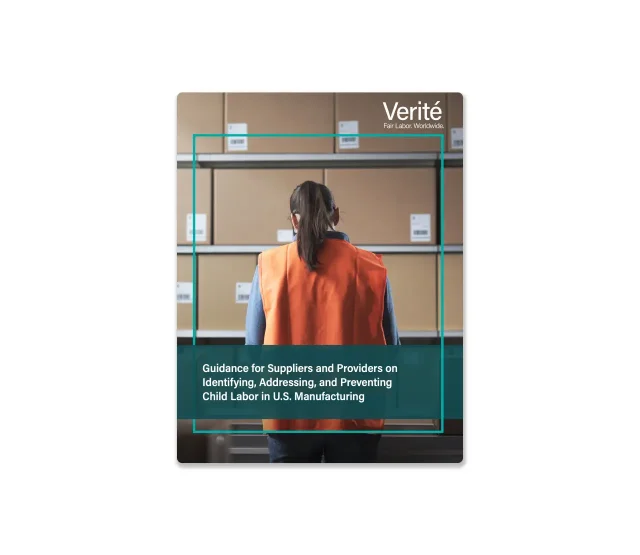
Guidance for suppliers and providers on identifying, addressing, and preventing child labor in U.S. manufacturing

This document is designed as a practical reference for suppliers, co-manufacturers, co-packers, and labor or service providers following completion of the e-learning course. While the course addresses both forced and child labor, the guidance focuses specifically on child labor. It outlines steps to comply with labor laws, recruit responsibly, and minimize the risk of child labor in U.S. manufacturing supply chains.

Download document
EN (pdf, 11 MB)

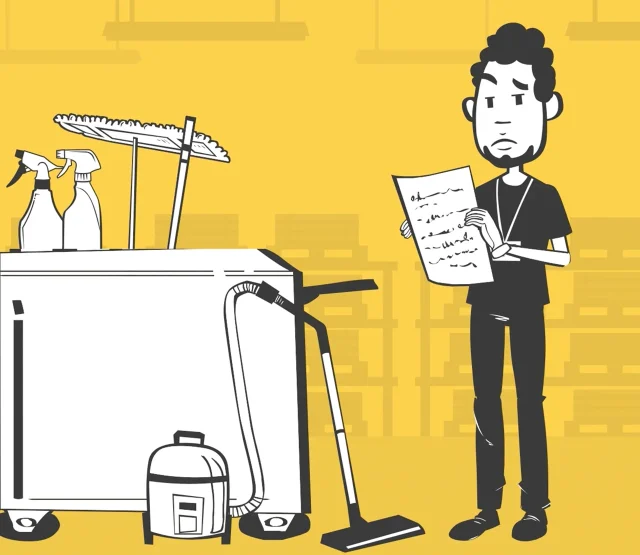
This is a fictional case study about Eduardo, a migrant worker who ends up in a situation of forced labor in the United States. This video excerpt is part of the publicly available e-Learning course, "Responding to Child Labor and Forced Labor in U.S. Manufacturing."

This is a fictional case study about Juana, a young migrant who ends up in a situation of child labor in the United States. This video excerpt is part of the publicly available e-learning course, "Responding to Child Labor and Forced Labor in U.S. Manufacturing."

Additional resources

Young Worker Toolkit
U.S. Department of Labor
Wage and Hour Division Employer Self-Assessment
U.S. Department of Labor
Case Study of Eduardo, a migrant worker in a situation of forced labor in the United States
Verité
Case Study of Juana, a young migrant in a situation of child labor in the United States
Verité

Related initiative

Responsible Sourcing Tool

Information and tools to support companies, federal contractors, federal procurement professionals, advocates, investors, consumers, and others in their efforts to prevent and address human trafficking, including forced labor, in global supply chains.

Man harvesting palm oil

Related initiative

Recruitment Cost Calculator

Accurate and up-to-date information on recruitment fees and related costs, enabling employers to enact ethical recruitment policies more effectively in their supply chains.

Verité Recruitment Cost Calculator

Partners and funding

The course was developed by Verité in partnership with AIM-Progress and with consultation from manufacturers, management systems experts, legal and direct social service providers, and child rights advocates.

This training was funded as part of the AIM-Progress Child and Forced Labor Initiative to support AIM-Progress members’ co-manufacturers, co-packers, suppliers, labor providers, and service providers to recruit responsibly and help manage potential risks of child and forced labor. AIM-Progress, with additional funding from Walmart and Cargill, generously extended funding to make these resources publicly available.

Build capacity and mitigate risks in supply chains

Our expert-led training equips your team with practical skills to identify risks and implement effective human rights due diligence across supply chains.

Contact us