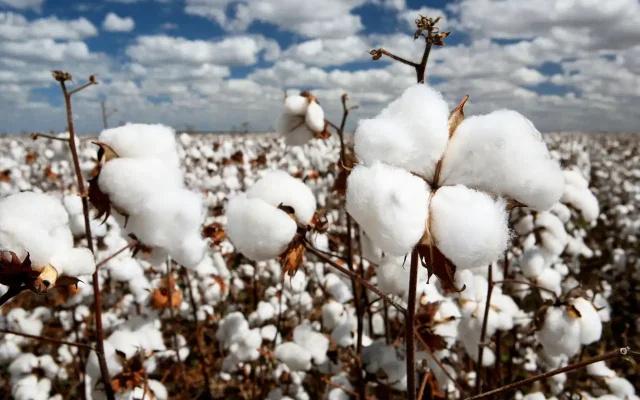
Cotton’s role as a cash crop in West and Central Africa brings economic importance but also deep trafficking risks.
Smallholder farms—often under three hectares—rely on manual, labor‑intensive seasonal work. Complex, hard-to-trace supply chains, coupled with child, migrant, and casual labor, as well as labor intermediaries, increase vulnerability to exploitation. The U.S. Department of State has documented forced labor or child labor in multiple countries, including Benin, Cameroon, Côte d’Ivoire, Mali, and Togo.
Overview of cotton production in Sub-Saharan Africa
Trade
The top exporters of cotton (neither carded nor combed) from sub-Saharan Africa in 2018 were Burkina Faso, Côte d’Ivoire, Sudan, Benin, and Mali.[1]
Although no individual country represents a significant percentage of global exports, as a region, West African exporters are the second largest regional exporting group of cotton.[2]
According to the Food and Agriculture Organization of the United Nations, the top producers of cotton lint for 2014 (the last year for which data was available) were Burkina Faso, Mali, Côte d’Ivoire, Nigeria, and Benin.[3]
The top importers of cotton from Africa in 2018 were China, Singapore, Bangladesh, France, and India.[4] Although Turkey was not in the top five importers, its imports have grown rapidly in recent years.
Features of production and supply chain
In sub-Saharan Africa, cotton is grown almost exclusively in a small-holder context, although it is more typically grown on larger commercial plantations in other parts of the world. The typical size of cotton farms in West Africa is under three hectares.[5] Employment in cotton is significant for top-producing countries; in Benin, some estimates put employment in the cotton sector at nearly 30 percent of total employment. Cotton is estimated to provide seven percent of total employment in Burkina Faso and 17 percent of employment in Mali.[6] Cotton is often alternated with subsistence agricultural crops. Irrigation systems used on plantations elsewhere are not available in the sub-Saharan African context so cotton growth in the region relies on rainfall. Sub-Saharan African cotton is harvested by hand, which is time and labor intensive, but efficient in terms of reducing waste.[7] African cotton farmers may use manual or ox-drawn implements, but little other technological intervention or inputs. It is estimated that cotton farming in West Africa requires about 150 person/work days per hectare.[8]
After harvesting, raw cotton is transported to gins – generally located relatively near farms in West Africa – where it is processed into lint. Secondary processing, or turning the lint into yarn, thread, and fabrics, tends to be done outside African producing countries. Cotton yarn is then woven into textiles, which are made into garments and home goods. This production also predominantly happens outside of Africa, although the potential for integrated supply chains (where cotton is grown and consumer products are manufactured within the same country or region) in Africa has been noted as a potential advantage of the developing African apparel/textile manufacturing sector.
Because production stages happen across different countries and continents, it can be difficult to determine where the cotton fibers in consumer items come from. There is a lack of direct communication between ginning mills and textile and spinning mills, as well as ginning mills and farms, as most mills purchase from agents. It is therefore extremely difficult to trace cotton from farming to manufacturing.[9] For example, fibers from Egypt, Mali, Tajikistan, and the United States may all be combined into one garment at a textile mill in Indonesia.
In the years after West African countries achieved independence, cotton production was controlled by parastatal institutions that acted as buyers and ginners and provided inputs to growers until the International Monetary Fund and World Bank Structural Adjustment Programs imposed a process of privatization and other sector reforms.[10] The actual pace of reform has been slow, with the state retaining partial ownership of cotton gins in Burkina Faso and Mali.[11]
Cotton is a dominant cash crop for many West and Central African countries – it contributes over 60 percent of crop revenue in Mali, Burkina Faso, Benin, and Chad – so price shocks can have significant impacts. Cotton prices have been volatile and trending downward, putting pressure on farmers.[12]
[13]
Cotton prices in Africa are further depressed in part because of U.S. cotton subsidies; some estimates note that withdrawal of these subsidies could raise cotton prices in Africa by as much as 26 percent.[14] Further, because so much of the value addition happens further down the supply chain, the farm gate price for cotton represents only a small percentage of the price a consumer pays for a finished cotton product. Some analysis has noted that when farm gate cotton prices have fallen in countries such as Burkina Faso, youth migration into more hazardous sectors, such as mining, has increased.[15]
Key documented trafficking in persons risk factors in cotton production
According to the U.S. Department of State’s 2019 Trafficking in Persons Report, cotton is produced with forced labor or forced child labor in Cameroon, Mali, and Togo.[16]
The U.S. Department of Labor’s 2018 List of Goods Produced by Child Labor or Forced Labor notes forced labor in Benin and Burkina Faso.[17]
Undesirable and hazardous work
Cotton work can be hazardous, particularly for children (see below). Workers can face exhaustion and heat stroke. Workers can also be exposed to harsh chemicals as cotton uses more insecticide than any other crop, making up 16 percent of global use. Exposure to these chemicals can cause tremors, nausea, weakness, blurred vision, extreme dizziness, headaches, depression, and even paralysis or death. In ginning, children work without protective equipment, inhaling contaminated air, which leads to respiratory problems.[18]
Vulnerable work force
Child labor
The U.S. Department of Labor’s 2018 List of Goods Produced by Child Labor or Forced Labor notes child labor in Benin, Burkina Faso, Mali, and Zambia.[19]
Child labor is typically not prevalent in countries with mechanized cotton production, but due to the smallholder nature of cotton farming in Africa in countries such as Zambia, Benin, Burkina Faso, and Mali, children often work on their family’s plot. Some children may be involved in worst forms of child labor if they are exposed to dangerous conditions including long hours, heat, and pesticides, and forego their education. Benin, for example, reportedly has low rates of school attendance in cotton growing regions.[20] In other cases, children perform age-appropriate light tasks and continue to participate in schooling, which does not necessarily constitute the worst forms of child labor. Some children also migrate to work (see below).
[21]
Gender dynamics of production
Women are responsible for an estimated 70 percent of subsistence food crops, which can hinder participation in some cash crops including cotton.[22] In several African countries, cotton shifted from a “female” crop to a male-dominated crop when it became a cash export crops. Women contribute household labor at high rates but often do not have access to household cash income earned from cotton production.[23] Cotton picking by hand is generally considered a female task because of the need for small fingers. In some countries, including Burkina Faso, women hire themselves as casual labor for cotton harvesting.[24]
Casual labor
The majority of labor on smallholder cotton farms in West Africa appears to be family or other kinship labor. However, other forms of casual labor, including hired labor or labor exchanges, are used, especially during peak harvest seasons.[25] A study in Burkina Faso found that cotton production used about 20 percent more hired labor per hectare than other smallholder crops.[26]
Migrant labor
Child migration in West African countries, such as Burkina Faso, Mali, and Benin, is relatively common. Boys aged 10 and older migrate from their rural homes to work on farms in other regions of the country, most often traveling to cotton-producing regions to assist in the cotton harvest. In some cases, these children migrate within well-established family or community “kinship” systems.
[27]
Research has primarily focused on the migration of boys for work in cotton in West Africa, but anecdotal evidence shows that girls migrate as well.[28]
Presence of labor intermediaries
The migration described above is not always voluntary and/or may have elements of coercion, particularly when labor recruiters are present. Labor recruiters have been noted particularly in Burkina Faso. A 2006 study found that recruiters visited villages in Burkina Faso promising boys cash or goods (such as bicycles or clothing) for following them to employment at cotton producing regions either domestically within Burkina Faso or internationally in Benin. Some of these recruiters were farmers looking for labor on their own or their neighbors’ farms, but others were independent recruiters. Some children working for farmers may not be paid until the end of the harvest cycle, which may compel them to remain in their jobs, even if they are being mistreated or want to go home. Payment is sometimes deferred even longer, potentially beyond the first year, and wages are often much less than promised.[29] In some cases, workers are not paid at all.[30]
In 2012, Interpol rescued over 400 child trafficking victims from Burkina Faso, some of whom were reportedly working on cotton farms.[31]
The 2017 U.S. Department of State Trafficking in Persons report noted a pending investigation in Burkina Faso of unregistered marabous transporting children from Burkina Faso to Côte d’Ivoire and Mali, “allegedly for forced labor in cotton fields.”[32]